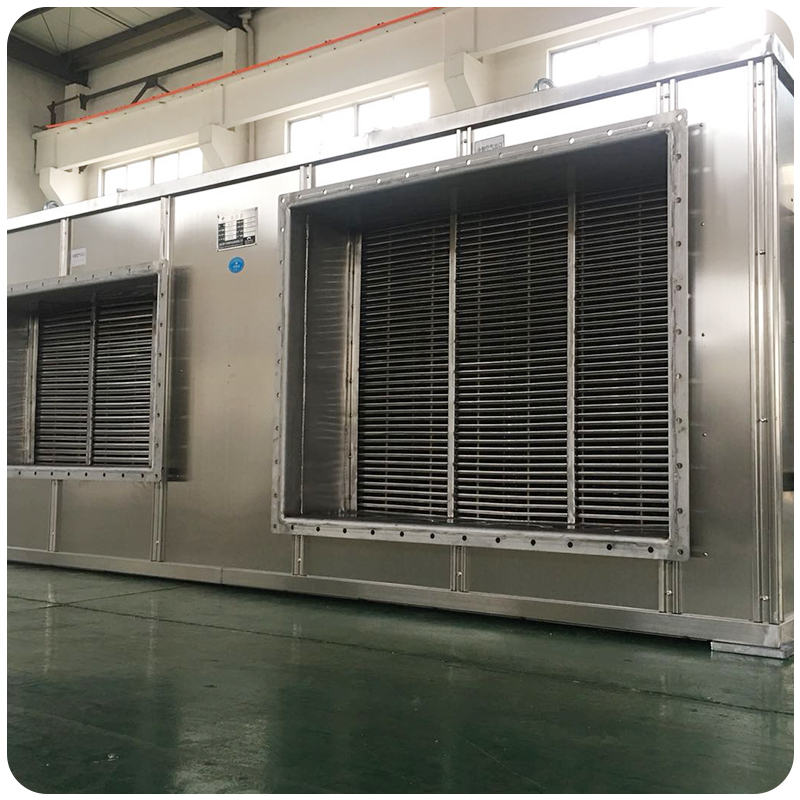
In modern industrial processes — from power generation and petrochemical refining to waste heat recovery and advanced manufacturing — high temperature gas heat exchanger design plays a pivotal role in energy efficiency, safety, and long‑term reliability. With operating temperatures often exceeding 600 °C and pressures capable of pushing equipment to its limits, selecting and engineering the right heat exchanger demands careful consideration of materials, flow dynamics, thermal performance, maintenance, and system integration.
Below we present a comprehensive design and selection guide — covering fundamental principles, material and configuration choices, performance considerations, comparative data, and practical recommendations — that empowers engineers and decision‑makers to optimize their high‑temperature heat exchanger applications.
Key Takeaways
High temperature gas heat exchangers are engineered to transfer thermal energy efficiently under extreme temperature conditions (>600 °C), addressing challenges such as material degradation, thermal stress, and corrosion.
Material selection and structural design determine long‑term durability, operational efficiency, and safety, particularly when gases with corrosive components are involved.
Choosing the right heat exchanger type — whether plate, shell‑and‑tube, or innovative configurations — requires balancing thermal performance, pressure capabilities, space constraints, and maintenance needs.
High performance solutions like the Gas‑to‑Gas Platular Heat Exchanger offer optimized designs for industrial high‑temperature applications.
What Is a High‑Temperature Gas Heat Exchanger?
A high temperature gas heat exchanger is a device designed to transfer heat between two or more gaseous streams (or a gas and another medium) at elevated temperatures, often in excess of 600 °C. These devices are essential components in industrial systems where maximizing energy utilization and minimizing waste heat are critical.
Unlike traditional heat exchange equipment designed for liquids or low‑temperature gases, high‑temperature gas heat exchangers must tolerate thermal stresses, oxidation, creep, corrosion, and material degradation over prolonged operational cycles. This affects the choice of materials, mechanical design, sealing technologies, and flow arrangements.
Core Design Principles
Heat Transfer Efficiency
The fundamental goal in heat exchanger design is maximizing the rate of heat transfer (Q) while maintaining operational reliability and acceptable pressure drops. The performance equation is often expressed as:
=⋅⋅ΔlmQ=U⋅A⋅ΔTlm
Where:
| Term | Meaning |
| Q | Heat transfer rate |
| U | Overall heat transfer coefficient |
| A | Surface area available for heat transfer |
| ΔTₗₘ | Log mean temperature difference |
High temperature applications typically demand high U values, which are achieved through increased surface area, favorable flow arrangements (e.g., counter‑flow), and materials with superior thermal conductivity.
Flow Arrangements
Counter‑flow
Hot and cold gases move in opposite directions.
This configuration maximizes ΔTₗₘ and overall heat transfer efficiency.
Ideal for high‑temperature gas heat exchangers where approach temperatures are tight.
Parallel‑flow
Both fluids travel in the same direction.
Simpler but less efficient in thermodynamic performance.
Used where module simplicity or space constraints take priority, but not ideal when high ΔTₗₘ is required.
Materials Selection
Material choice is often the most critical decision in high temperature heat exchanger design. It directly affects heat transfer performance, mechanical integrity, corrosion resistance, and operating lifespan.
Common Material Categories
| Material Type | Key Properties | Typical Limitations |
| Iron‑based Alloys | Good high‑temp strength, familiar fabrication | Lower corrosion resistance than nickel alloys |
| Nickel Alloys (e.g., Inconel) | Excellent high‑temp strength, oxidation & corrosion resistance | Higher cost |
| Ceramics & Advanced Composites | Exceptional high temp tolerance, low creep | Brittle, more complex fabrication |
Material Selection Criteria
Factors to weigh when selecting materials include:
Operating temperature range
Thermal stress and expansion coefficients
Corrosiveness of process gases
Mechanical strength under cyclic loading
Fabrication and maintenance constraints
Materials with high thermal conductivity and low thermal expansion help maintain efficiency and structural integrity under repeated thermal cycling — a common scenario in gas heat applications.
Heat Exchanger Configuration Options
Comparative Configurations
The table below summarizes common heat exchanger configurations used in high temperature gas service:
| Configuration | Temperature Range | Pressure Capacity | Heat Transfer Efficiency | Maintenance |
| Shell & Tube | High (up to ~800 °C) | Excellent | Moderate | Requires space and periodic tube access |
| Plate & Frame | Moderate to High | Limited vs tubes | High (due to large surface area) | Easier access, modular |
| Plate‑Fin / Modular Plate | Very High | High | Very High (compact) | Challenging cleaning |
| Bayonet / Double‑Pipe | Very High | Excellent | Low‑Moderate | Good access for cleaning |
Selecting the optimal configuration depends on application requirements, space constraints, and performance needs.
Detailed Design Considerations
️Temperature and Pressure Ratings
High temperature gas heat exchanger design starts with clearly defining the maximum operating temperature and pressure. If a unit is underspecified, thermal stresses can cause:
Specialized alloys and ceramics — while more costly — may be necessary if the design temperature exceeds the safe threshold for more common metals.
Flow Distribution and Channel Design
A uniform flow distribution across heat transfer surfaces ensures maximum efficiency and minimizes localized hot‑spots which can lead to thermal fatigue. Computational fluid dynamics (CFD) simulations are often used in advanced design stages to:
Thermal Expansion and Stress Management
High temperatures induce thermal expansion. For example:
Design mitigations include:
Sizing Criteria for High‑Temperature Gas Heat Exchangers
Key sizing parameters include:
| Parameter | Importance |
| Heat duty (Q) | Determines required surface area |
| Approach temperature | Affects achievable ΔTₗₘ |
| Fluid properties | Influence velocity, conductivity |
| Pressure drops | Must be limited to avoid system inefficiencies |
Designers often rely on iterative processes — supported by simulation tools — to balance surface area with flow restrictions. Because gases have lower thermal capacity than liquids, achieving effective heat transfer requires careful consideration of flow velocities and channel geometry.
Manufacturing & Fabrication Challenges
Welding and Joint Integrity
At high temperatures, weld zones often become vulnerable to oxidation and cracking. Specialized welding practices and inspection regimes (e.g., non‑destructive testing) are essential to preserve joint integrity over years of operation.
Surface Treatments
Coatings can protect against oxidation and corrosion, extending service life. Ceramic coatings, high‑temperature alloys, and thermally sprayed barriers are commonly used.
Application Examples
High temperature gas heat exchangers find use in sectors such as:
Petrochemical refining
Gas turbines & power generation
High temperature waste heat recovery
Chemical process heating and preheating
Advanced designs, including integrated solutions like the Gas‑to‑Gas Platular Heat Exchanger, provide modular performance tailored to high‑temperature applications with excellent heat transfer efficiency and operational resilience.
Maintenance and Service Life
Fouling and Cleaning
Gaseous streams may carry particulates that settle on heat transfer surfaces, impairing performance. Design provisions for ease of access, cleaning, and serviceability prolong equipment life and reduce downtime.
Inspection Regimes
Routine inspection — including:
— ensures early detection of wear and prevents catastrophic failure.
Performance Metrics
For comparative analysis, the table below outlines performance trends in common scenarios:
| Metric | Shell & Tube | Plate | Plate‑Fin |
| Heat transfer efficiency | Moderate | High | Very high |
| Operating temp limit | Very high | Moderate‑high | High |
| Pressure drop | Lower | Higher | Variable |
| Size compactness | Larger | Medium | Compact |
| Maintenance access | Moderate | Easier | Difficult |
FAQs
Q1: What defines a “high temperature” gas heat exchanger?
A high temperature gas heat exchanger is typically defined as one capable of reliably operating at temperatures above ~600 °C, requiring special materials and design strategies.
Q2: Why are materials like nickel alloys and ceramics used in high temperature designs?
Because they offer superior corrosion resistance, thermal strength, and oxidation durability at elevated temperatures where carbon steels fail prematurely.
Q3: Are plate heat exchangers suitable for high temperature applications?
Yes — especially when engineered with high‑temperature alloys and proper sealing. They provide compact design and high heat transfer efficiency compared to some shell‑and‑tube units.
Q4: How does flow arrangement affect performance?
Counter‑flow arrangements maximize the temperature gradient and improve heat transfer efficiency, which is especially beneficial in high temperature heat exchanger applications.
Conclusion
Designing and selecting a high temperature gas heat exchanger requires meticulous attention to thermal performance, materials science, mechanical design, and lifecycle maintenance. With pressures and temperatures far beyond standard operating ranges, the right engineering choices can dramatically improve reliability, safety, and energy efficiency.
For industrial engineers seeking optimized solutions, high performance options like the Gas‑to‑Gas Platular Heat Exchanger represent a robust, efficient, and flexible choice — leveraging advanced design principles to meet the rigors of high temperature gas heat exchanger applications while delivering superior thermal performance and long operational life.


