Gas-gas heat exchangers move heat from one gas stream to another. The two gas streams do not mix. These devices use temperature differences to save energy.
Gas-to-Gas Plate Heat Exchangers help use energy better.
They lower the costs to run machines.
Their small size and large surface area make processes work better.
If you know how they work and where to use them, you can choose the best way for factories.
Key Takeaways
Gas-gas heat exchangers move heat between two gas streams. The gases do not mix. This helps save energy and makes things work better.
These devices help lower costs at work. They also cut down on pollution. They do this by using heat again in factories.
Picking the best flow setup, like counterflow, helps move more heat. This makes the process work better.
Making the surface area bigger in heat exchangers helps move more heat. This makes the process work better.
Doing regular checkups and making smart design choices stops problems. This helps stop corrosion and fouling. It also helps the device last longer.
Gas-Gas Heat Exchangers Overview
Gas Gas Heat Exchanger Definition
You can think of a gas gas heat exchanger as a special device that moves heat from one gas stream to another. This device does not let the gases mix. Instead, it uses a wall or surface to keep them apart. Many gas gas heat exchangers use a vertical shell and tube design. Gas flows on both the shell and tube sides. The main job of this heat exchanger is to transfer heat between two process gases. You will see these devices in factories and power plants where gas needs to be heated or cooled.
Purpose and Function
Gas-gas heat exchangers help you use energy better. They take heat from a hot gas and move it to a cooler gas. This process increases efficiency and saves energy. You can use these devices to recycle energy in factories. For example, they transfer high-temperature energy from flue gas to another fluid. This raises the temperature or pressure of the fluid. When you do this, you reduce emissions and help protect the environment.
Gas-gas heat exchangers also improve exhaust temperatures. This helps flue gases lift and spread, which lowers pollution near the ground.
You will notice that temperature differences drive heat transfer. The hot gas loses heat, and the cool gas gains heat. The wall between the gases lets energy move from one side to the other. Here is a simple table to show how temperature gradients work:
Temperature Gradient | Heat Transfer Mechanism |
Hot Gas to Cool Gas | Energy moves through the wall. The cool gas absorbs heat. The hot gas loses heat. |
The temperature difference across the wall makes heat flow.
You need a colder gas to cool another gas to a certain temperature.
You need a hotter gas to heat another gas to the level you want.
When you use gas-gas heat exchangers, you boost efficiency and lower costs. You also help keep the air cleaner by reducing pollution.
Heat Transfer Principles
Thermodynamics in Heat Exchanger
You need to know some basic science rules to see how gas-gas heat exchangers work. These rules show why heat moves and how we use it.
The First Law of Thermodynamics says energy cannot be made or destroyed. In a heat exchanger, energy does not disappear. Heat just moves from hot gas to cooler gas. This rule helps you see where the energy goes.
The Second Law of Thermodynamics says heat always moves from hot to cold. You cannot make heat go the other way unless you add extra work. This law also says disorder, called entropy, always gets bigger. In a heat exchanger, heat moves by itself from the hotter gas to the cooler gas.
The Third Law of Thermodynamics says when you get close to absolute zero, entropy gets very small. You cannot reach absolute zero, but this law shows the limits of cooling.
When you use these rules, you can guess how heat will move in a heat exchanger. You can also make better systems to save energy.
Surface Area and Efficiency
The surface area inside a heat exchanger is very important. If you want better heat transfer, you should try to make the area bigger where gases touch the walls.
Adding fins or rough surfaces makes the area larger.
More surface area gives more space for heat to move.
When you make the area bigger, heat moves faster.
You can see this in many designs. Plate heat exchangers use lots of thin plates to make a big surface area in a small space. This design helps you get more heat from the same gas. When you make the surface area bigger, the gas leaving the heat exchanger is cooler. This makes the process work better and saves energy.
Design Feature | Effect on Heat Transfer Efficiency |
More surface area | Higher efficiency |
Fins or textures | Faster heat transfer |
Thin walls | Better thermal contact |
If you want your heat exchanger to work best, you should try to make the surface area as big as you can. This simple rule can help you save money and energy.
Flow Arrangements
How you set up the gas flow in a heat exchanger changes how well it works. There are three main ways to do this:
Parallel Flow: Both hot and cool gases move the same way. The temperature difference is biggest at the start and gets smaller as they go. This way is easy but not the best.
Counterflow: Hot gas and cool gas move in opposite ways. This keeps a bigger temperature difference for longer. You get better heat transfer and higher efficiency with counterflow.
Crossflow: The gases move at right angles to each other. This design is used in small heat exchangers. It gives a good balance between size and how well it works.
Tip: For the best heat transfer, you should pick a counterflow setup. This way uses thermodynamics to keep the temperature difference high and energy loss low.
You can use these flow setups to fit what you need. Each one uses the heat transfer rule in a different way, but all help move heat from one gas to another. If you know these rules, you can make better gas-gas heat exchangers for any job.
Types and Design of Gas-Gas Heat Exchangers
Common Types
There are a few main types of gas-gas heat exchangers. Each type is good for different jobs and places.
Plate Heat Exchanger: This kind uses many thin plates stacked up. Gas moves between the plates. The big surface area helps heat move fast. People use this type when there is not much space.
Shell-and-Tube Heat Exchanger: This one has tubes inside a shell. One gas goes through the tubes. Another gas moves around the tubes. This type works well with high pressure and heat.
Regenerative Heat Exchanger: This type stores heat in a solid part. Gas flows through the solid and heat moves from hot gas to cool gas. This type is good when you want to save a lot of energy.
Pick the type that fits your job, space, and money best.
Design Considerations
When you make a gas-gas heat exchanger, you need to think about some important things. Good choices help it work better and last longer.
Material Selection: Choose stuff that does not rust and can take high heat. Stainless steel is a good choice for many gases.
Maintenance Needs: Pick a design that is easy to clean and check. This keeps the system safe and working well.
Surface Area: Make the part where gas touches the heat exchanger as big as you can. More area means heat moves better.
Pressure Drop: You want gas to move easily. If pressure drops too much, the system uses more energy.
You can use computer tools called CFD to make your design better. CFD shows how gas moves inside the heat exchanger. It helps you find the best shapes and layouts for heat to move well. CFD also helps you spot problems like uneven flow or big pressure drops before you build it. This saves time and money because you do not need to make lots of test models.
Design Factor | Why It Matters |
Material | Handles heat and resists corrosion |
Surface Area | Improves heat transfer |
Pressure Drop | Keeps gas moving efficiently |
Maintenance | Makes cleaning and repairs easier |
If you use these tips, you can make a gas-gas heat exchanger that works well and lasts a long time.
Applications and Benefits
Industrial Uses
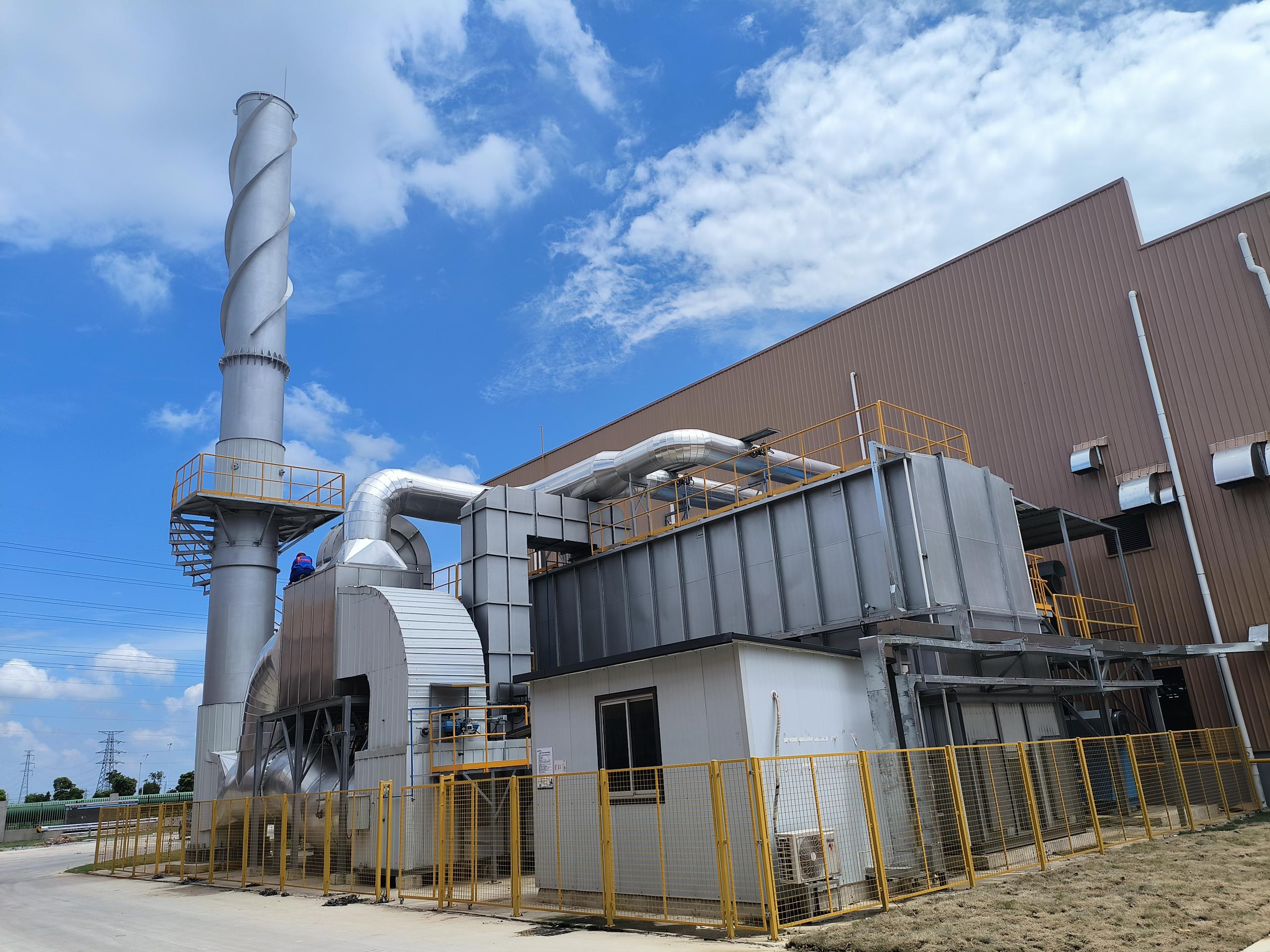
Gas-gas heat exchangers are used in many factories. They help save heat that would be wasted. In power plants, they take heat from exhaust gases. This makes the plant work better and use less energy. Some power plants and cogeneration systems use them to reuse heat from flue gases. The saved heat can warm up new gases or help with carbon capture. Factories use these devices to get energy from hot gas streams. This helps them use energy in a smarter and cheaper way.
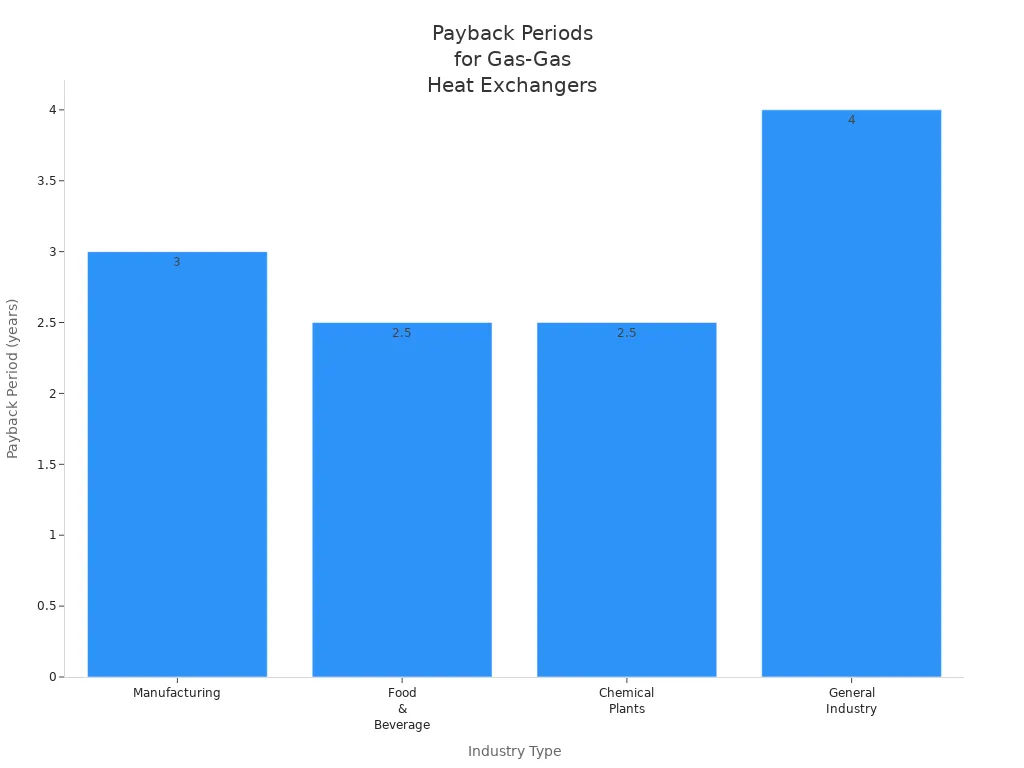
Food and drink factories use them to save heat during cooking and drying.
Chemical plants use them to get back heat and help with heating.
Manufacturing plants use them to save heat from ovens and kilns.
Energy Efficiency Advantages
Gas-gas heat exchangers help you use less energy and spend less money. When you save heat from gas streams, you burn less fuel and make less pollution. This makes your process work better and helps the planet. You can see how fast you get your money back in different jobs. Food and manufacturing plants often get their money back in two to four years. Chemical plants that run all the time save money even faster. Using these devices to save heat makes your work better and helps you reach energy goals.
When you save and reuse heat, you make your process work better and help the environment.
Limitations
It is important to know what gas-gas heat exchangers cannot do. Hot gases can cause rust and make the device less reliable. Brazed plate heat exchangers can have pressure drop problems. You may need more than one, which costs more. Shell and tube heat exchangers do not move heat as well, so you need bigger ones. When it gets hotter, the pressure they can handle goes down. Welds in shell and tube types can make them less reliable over time.
Limitation | Description |
Corrosion | At high temperatures (600° to 900° C), gases become highly corrosive, leading to significant corrosion issues. |
Pressure Drop | Using Brazed Plate Heat Exchangers (BPHE) can result in increased pressure drop, requiring multiple units to manage it, which raises costs. |
Thermal Effectiveness | Shell & Tube Heat Exchangers have lower thermal effectiveness, necessitating larger heat transfer areas, thus increasing volume and cost. |
Working Pressure Limitations | BPHEs have decreasing allowable working pressures at higher temperatures, limiting their operational capacity. |
Reliability Issues | The manufacturing process of Shell & Tube Heat Exchangers involves many welds, which may lead to reliability concerns over time. |
Fouling and rust also make heat exchangers work less well. Fouling makes a layer that blocks heat from moving. This means you need a bigger temperature difference to move the same heat. More fouling means you use more energy. Ash and bad gases can cause fouling, wear, and rust. These problems make the system less efficient and can break the equipment. You need better designs and regular cleaning to stop these problems.
Fouling makes heat move slower and less well.
More resistance makes it harder for heat to move.
Fouling makes you use more energy.
Fouling, wear, and rust are common problems.
These problems make the system less efficient and can break it.
New designs help stop fouling and rust.
You can see that gas-gas heat exchangers move heat from one gas to another. These devices help you save energy and spend less money. They make your process work better by using heat from one gas to warm up another gas. You can find them in many factories to get back heat and keep machines safe.
Gas-gas heat exchangers move thermal energy, which is important for factories.
They help you use less gas and keep the air cleaner.
New designs use smart sensors and IoT to make gas systems work better.
You can control the temperature in your process with gas-gas heat exchangers.
You can get heat back and use it again, which saves money.
You can keep your equipment safe from very hot gas.
It is good to learn about gas-gas heat exchangers. They help you reach energy goals and keep your process safe. In the future, gas systems will work better and save more heat.
FAQ
What is the main job of a gas-gas heat exchanger?
You use a gas-gas heat exchanger to move heat from one gas stream to another. The device keeps the gases apart. This helps you save energy and control temperatures in your process.
How do you keep gases from mixing in a heat exchanger?
A solid wall or surface separates the two gas streams. You do not need to worry about mixing. The wall lets heat move but blocks the gases from crossing over.
Why should you care about surface area in heat exchangers?
More surface area means better heat transfer.
You get faster and more efficient heating or cooling. Designs with fins or plates give you more area for the gases to touch.
Where can you use gas-gas heat exchangers?
You can use them in power plants, factories, and chemical plants. They help you recover waste heat, save fuel, and lower pollution.
What problems can happen with gas-gas heat exchangers?