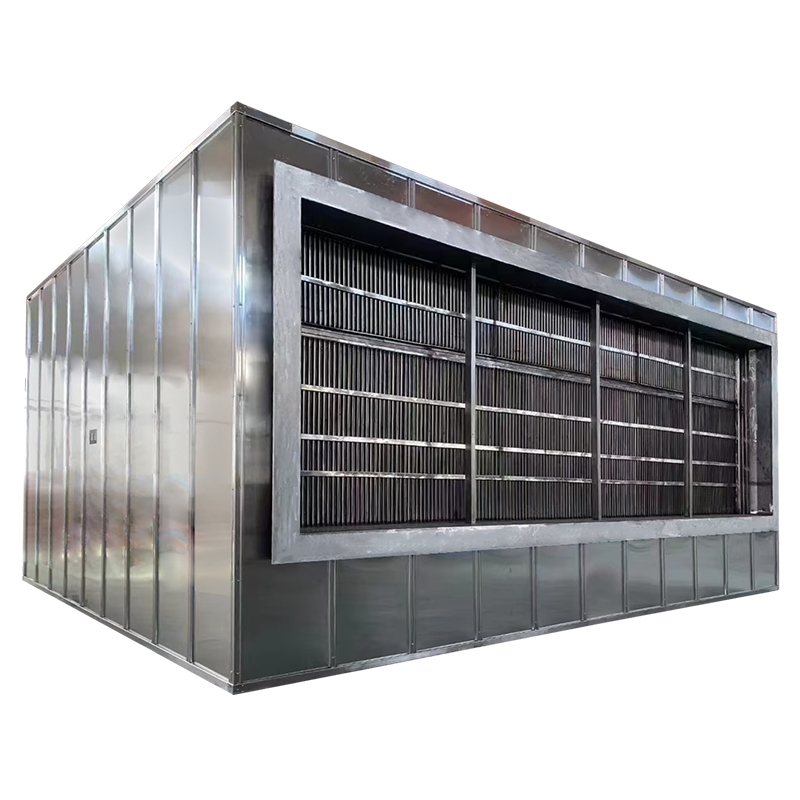
A Gas‑to‑Gas Plate Heat Exchanger (PGHE) is a highly efficient thermal device engineered to transfer heat between two gas streams without mixing them. Unlike conventional shell‑and‑tube heat exchangers, plate heat exchangers achieve superior performance through their thin, stacked metal plate architecture that creates alternating hot and cold gas channels. This configuration maximizes thermal transfer surface area while maintaining a compact footprint—ideal for industrial processes, waste heat recovery, and energy efficiency applications.
In this article, we’ll explore the core principles, working mechanics, construction features, design considerations, flow arrangements and industrial applications of gas‑to‑gas plate heat exchangers. We’ll also discuss key factors influencing performance and why these systems are important in the drive toward energy conservation and cost reduction.
What Is a Plate Heat Exchanger?
A plate heat exchanger consists of a series of thin metal plates arranged in a stack, forming parallel channels through which two separate gas streams flow in alternating pathways. Heat is transferred across these plates—hot gas on one side transfers thermal energy through the metal to cool gas on the other side—without the two gases ever mixing.
Key Features
Parallel plate multi‑channel architecture
Thin metal plates create multiple alternating channels for the two gas streams.
Counterflow arrangement
Most designs use counterflow (gases moving in opposite directions) to maximize heat exchange efficiency.
Compact and efficient design
Comparatively small footprint yet high heat transfer area relative to volume.
High turbulence for enhanced transfer
Corrugated plate surfaces create turbulence, improving heat transfer rates.
Principles of Operation
Heat Transfer Fundamentals
Plate heat exchangers operate based on thermal conduction and convection principles:
Thermal Conduction: Heat flows through the metal plate from the hotter gas channel to the cooler gas channel.
Convection: Gas movement along the channels carries thermal energy into and out of the heat exchanger.
According to heat transfer law, heat flows from high temperature to low temperature regions, provided there is a temperature difference. In PGHEs, this gradient between hot and cold gases drives the heat exchange process.
Channel Flow and Heat Exchange
The space between two adjacent plates forms a micro‑channel. Alternate channels carry the hot gas and cold gas streams respectively. The heat energy from the hot gas is conducted through the plate material and absorbed by the cold gas on the adjacent channel, raising its temperature.
This indirect exchange ensures:
Construction and Materials
Plate heat exchangers are typically constructed from stainless steel or other corrosion‑resistant metals to withstand high temperatures and corrosive environments found in industrial applications.
Core Components
Heat transfer plates: Thin metal sheets, often stainless steel, arranged in a stack.
Gaskets (in some types): Elastomeric seals used to direct flow and prevent leakage between channels.
Frame and support system: Holds the plate stack together and provides connection points for gas inlet and outlet.
Plate Surface Patterns
Corrugated or ridged plate surfaces enhance turbulence in the gas streams—this increases the effective surface area and accelerates heat transfer without significantly increasing pressure drop.
Working Mechanics
Gas Flow Paths
Instead of large, open tubes, PGHEs use thin, alternating channels for gas flow:
Hot gas enters through its designated inlet and flows through channels formed by the plates.
Cold gas enters through a separate inlet and travels through adjacent channels.
Plates act as barriers that prevent gas mixing but allow heat transfer through conduction.
This alternating channel arrangement—typically in counterflow mode—creates a temperature gradient across the entire length of the exchanger, which enhances thermal efficiency.
Pressure and Flow Considerations
Efficient heat exchange occurs when the flow is optimized for turbulence and surface contact without causing excessive pressure loss. Plate corrugation and flow design help create a balance between high transfer rates and acceptable pressure drop levels.
Flow Arrangement: Counterflow vs. Parallel Flow
✔ Counterflow (Preferred)
In counterflow arrangements, hot and cold gases travel in opposite directions, which:
Maximizes the temperature difference throughout the exchanger
Increases the approach temperature (i.e., the cold outlet temperature approaches the hot inlet temperature)
Improves overall transfer efficiency
✔ Parallel Flow (Less Common)
Cold and hot gases flow in the same direction. Although simpler, it typically yields lower efficiency due to reduced temperature gradient over the exchange surface.
Types of Plate Heat Exchangers
Although the basic mechanics remain consistent, PGHEs can vary by construction type:
Gasketed Plate Heat Exchangers
These use elastomer gaskets between plates to seal and channel gas flows. They are:
Easier to disassemble and maintain
Customizable by adding or removing plates
Ideal where cleaning and maintenance are frequent needs
Welded Plate Heat Exchangers
Permanently welded plates handle higher temperatures and pressures and are suited for demanding industrial gas‑gas applications.
Plate‑Fin Heat Exchangers
Although slightly different in design, plate‑fin exchangers use fins between plates to increase surface area and are especially useful for gas‑to‑gas heat exchange in aerospace and cryogenic systems.
Design Considerations
Material Selection
Materials must withstand thermal cycling, high temperatures, and corrosion—stainless steel is a common choice.
Plate Surface Pattern
Plate corrugation aids turbulence, which increases effective heat transfer.
Number of Plates
More plates increase surface area and improve exchange efficiency, but also raise complexity and cost.
Pressure Drop
Design must balance high thermal performance with acceptable pressure loss across channels.
Industrial Applications
Gas‑to‑Gas Plate Heat Exchangers are used widely across industries where heat recovery and energy efficiency are priorities:
Waste Heat Recovery
PGHEs recover heat from industrial flue gases—such as combustion exhaust—to preheat incoming process air or gas streams, improving energy efficiency and lowering fuel consumption.
Chemical Processing
Used to regulate gas temperatures in reactors or distillation columns where precise thermal control is critical.
Gas Turbine and Power Plants
Hot exhaust from gas turbines can be used to preheat combustion air, increasing turbine efficiency and reducing fuel requirements.
HVAC & Commercial Systems
Although less common in HVAC than in industrial use, plate heat exchangers help reclaim heat in large ventilation systems, reducing heating and cooling costs.
Advantages of Plate Heat Exchangers
| Feature |
Benefit |
| High surface area |
Excellent heat transfer efficiency |
| Compact footprint |
Space‑saving design |
| Modular construction |
Easy to customize and scale |
| Reduced operating costs |
Lower energy usage |
| Maintenance flexibility |
Especially with gasketed designs |
Limitations and Challenges
Despite their many advantages, gas‑to‑gas plate heat exchangers also face some limitations:
Potential for leakage if gaskets fail in gasketed designs.
Fouling and clogging if gas streams contain particulate matter.
Pressure limitations compared with some shell‑and‑tube designs.
Manufacturing costs for welded units are higher due to precision welding requirements.
Summary
Gas‑to‑Gas Plate Heat Exchangers represent a modern, efficient approach to thermal energy exchange between gas streams, enabling improved energy utilization, reduced operational costs, and enhanced process efficiency. With their compact design, high surface area and adaptable configurations, PGHEs are a preferred solution for waste heat recovery and high‑temperature applications across multiple industries.
When designed thoughtfully—balancing surface area, flow arrangement, and pressure characteristics—these heat exchangers can contribute significantly to sustainable industrial operation.


