Heat recovery is at the heart of modern industrial energy efficiency, and choosing the right heat exchanger technology for gas heat recovery can significantly impact performance, operating cost, and sustainability. Two leading technologies — plate heat exchangers and shell and tube heat exchangers — are commonly compared in industrial applications, especially when recovering waste heat from flue gases or process exhaust streams. Each technology has unique strengths and limitations: plate heat exchangers offer compact design and high thermal efficiency, while shell and tube heat exchangers excel in durability under extreme pressure and temperature conditions. Understanding the differences, performance trade‑offs, and best application scenarios is essential for engineers and decision‑makers.
Below, we present a comprehensive comparison and selection guide to help you determine which heat exchanger type is best for gas heat recovery, backed by data comparisons and practical insights that emphasize real‑world engineering considerations.
Key Takeaways
Plate heat exchanger designs provide higher thermal efficiency, superior compactness, and easier maintenance, making them ideal for many gas heat recovery systems.
Shell and tube heat exchangers offer robust performance in high‑pressure, high‑temperature industrial environments, though they require more space and longer maintenance cycles.
The choice depends on operating conditions, space constraints, long‑term cost, and heat recovery goals — with plate heat exchangers increasingly favored for efficiency and flexibility.
Overview of Heat Exchanger Technologies
What Is a Plate Heat Exchanger?
A plate heat exchanger uses a series of thin, corrugated metal plates clamped together to create alternating channels for hot and cold fluids. The high surface‑area plates and turbulence created by corrugation result in high heat transfer coefficients and closely approaching temperatures between streams.
Plate designs are particularly effective for gas heat recovery, as they optimize contact surface area within a compact footprint — an increasingly important metric in industrial energy management.
What Is a Shell and Tube Heat Exchanger?
A shell and tube heat exchanger consists of a bundle of tubes encased within a large shell. One fluid flows inside the tubes, while the other flows outside in the shell space. Heat is transferred through the tube walls. This design is a mainstay in heavy industry due to its robust construction and tolerances for pressure and temperature extremes
This dual‑medium configuration has made shell and tube units the traditional choice for petrochemical, power generation, and refinery processes.
Comparative Analysis: Plate vs. Shell and Tube
Below is a comprehensive data comparison of the two technologies based on key performance, cost, and operational metrics relevant to gas heat recovery applications.
| Feature / Metric |
Plate Heat Exchanger |
Shell and Tube Heat Exchanger |
| Heat Transfer Efficiency |
High — larger surface area and turbulence improve efficiency. |
Moderate — relies on tube surface area; lower efficiency for same footprint. |
| Footprint / Space Requirement |
Compact — requires significantly less floor space. |
Large — bulkier, requires more installation area. |
| Maintenance |
Easier access (plates can be removed/disassembled). |
More complex, especially for tube bundles deep inside shell. |
| Pressure Handling |
Moderate — limited by gasket or brazing technology. |
Excellent — can be engineered for high internal pressures. |
| Temperature Range |
Moderate — suitable for many gas recovery cases but gasket limitations apply. |
Wide — robust for extreme temperatures and continuous duty. |
| Scalability / Capacity Adjustment |
High — plates can be added or removed. |
Low — capacity fixed once built. |
| Initial Cost |
Typically lower |
Often higher due to material and fabrication costs |
| Total Cost of Ownership |
Lower in many cases due to efficient heat recovery and easier service |
Can be competitive in high‑temperature/high‑pressure severe duty |
Note on Pressure/Temperature: Some advanced plate heat exchangers — particularly welded plate designs — extend pressure and temperature capability beyond traditional gasketed units, narrowing performance gaps with shell and tube systems.
Heat Transfer Efficiency and Energy Recovery
A key factor in gas heat recovery is the overall heat transfer coefficient (U) and the ability to approach the pinch point temperature. Plate heat exchangers — because of their corrugated plate design — create high turbulence even at lower flow rates, significantly increasing heat transfer rates relative to shell and tube designs.
In practical terms:
Plate units can achieve a smaller temperature approach between hot gas exhaust and the recovered heat stream, improving energy capture in systems like flue gas recuperators and waste heat boilers.
Shell and tube designs might require more passes or larger size to achieve similar transfer, increasing footprint and cost without necessarily matching plate performance for the same space.
This difference can translate to significant fuel savings over a plant’s operational life, especially in energy‑intensive industries.
Operational and Maintenance Considerations
Maintenance Access
Plate Heat Exchanger:
Plates can often be individually inspected or replaced without major system removal — and cleaning is generally more straightforward due to the accessibility between plates.
Shell and Tube:
Cleaning typically requires mechanical or chemical methods to reach inside tubes, and inspecting deep tube bundles can be more complex.
Maintenance Costs
Although shell and tube exchangers might have fewer gasket or sealing concerns, the labor and downtime required for maintenance can be greater, especially in continuous processing environments. Plate units may require gasket replacement but often save overall maintenance time and associated costs.
Suitability for Gas Heat Recovery Applications
When to Choose Plate Heat Exchangers
Plate heat exchangers are especially suited to:
Waste heat recovery systems where space is limited.
Processes needing high thermal efficiency and precise temperature control.
Operations with frequent maintenance cycles requiring easy access and modular capacity adjustments.
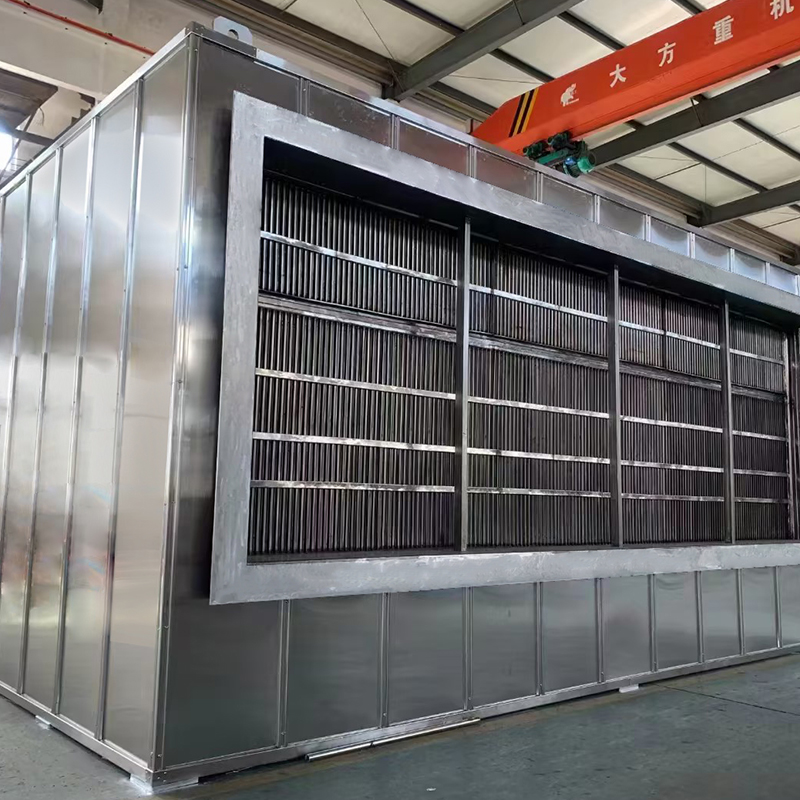
One example of an optimized plate design for industrial gas heat recovery is the Gas‑to‑Gas Platular Heat Exchanger — a compact unit engineered to maximize energy capture from exhaust gases while maintaining structural durability.
When to Choose Shell and Tube Heat Exchangers
Shell and tube heat exchangers are preferred when:
Operating pressures and temperatures exceed typical plate exchanger limits.
Fouling or abrasive gas streams demand robust, large‑passage flow paths.
Long‑term heavy‑duty service where mechanical ruggedness is essential.
These systems remain the default in applications such as petrochemical reactors, utility steam generation, and refinery heat integration when extreme conditions are paramount.
Cost and Lifecycle Economics
Selecting between plate and shell and tube configurations also requires a total cost of ownership (TCO) perspective. Beyond the initial purchase price — which is often lower for plate exchangers — consider:
| Cost Element |
Plate Heat Exchanger |
Shell and Tube Heat Exchanger |
| Initial CAPEX |
Lower |
Higher |
| Installation Cost |
Lower (compact) |
Higher (larger space & handling) |
| Operational Efficiency |
Higher (better recovery) |
Moderate |
| Maintenance Cost |
Moderate (gaskets) |
Moderate‑high (tube cleaning) |
| Downtime Impact |
Lower |
Higher |
Efficient heat recovery directly correlates to lower fuel expenses and rapid ROI, often favoring plate technologies in many industrial waste heat recovery projects.
Challenges and Limitations
While plate heat exchangers offer many benefits, they also have limitations:
Pressure and temperature limits — standard gasketed designs are limited compared to shell and tube unless welded plate designs are used.
Potential for gasket degradation over time, especially in corrosive gas environments.
Fouling sensitivity — closer plate spacing can be more prone to clogging than larger tube passages.
Shell and tube designs are not without disadvantage either, chiefly in larger footprint, complicated maintenance access, and generally lower thermal efficiency per unit volume compared to plates.
FAQs
Q1: Which heat exchanger type offers better heat recovery efficiency for gas streams?
Plate heat exchangers typically provide higher heat recovery efficiency due to larger surface area and turbulence enhancing thermal transfer.
Q2: Are shell and tube heat exchangers better for high‑pressure environments?
Yes — shell and tube designs are generally more robust at high pressures and temperatures, making them suitable for extreme industrial conditions.
Q3: Can plate heat exchangers be used for all gas heat recovery applications?
Plate exchangers excel in many gas heat recovery roles but may need welded plate or special designs for higher pressure/temperature scenarios.
Q4: How does maintenance compare between the two systems?
Plate heat exchangers often allow easier access and quicker cleaning, while shell and tube units can require more involved internal cleaning and inspections.
Conclusion
When comparing plate heat exchangers vs. shell and tube systems for gas heat recovery, understanding the attributes of each technology is vital. Plate heat exchangers excel in thermal efficiency, compactness, and flexibility, making them a strong choice for systems prioritizing energy recovery and space savings. At the same time, shell and tube exchangers remain indispensable in high‑pressure, high‑temperature, heavy‑duty scenarios where robust mechanical design is crucial.
For many industrial heat recovery needs — especially where efficient gas heat transfer and operational adaptability matter most — advanced plate solutions like the Gas‑to‑Gas Platular Heat Exchanger offer a compelling balance of performance, space efficiency, and long‑term operational savings.


