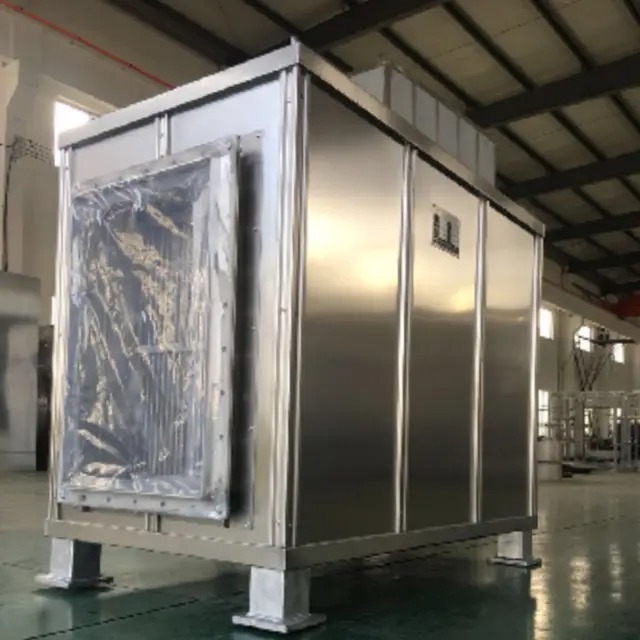
In industrial processes, custom heat exchanger structures are engineered solutions tailored to meet specific thermal transfer, space, material compatibility, and performance requirements that standard “off‑the‑shelf” designs cannot address. Unlike generic units, custom heat exchangers are designed from scratch or substantially adapted to match unique operating conditions — such as unusual temperatures, pressures, corrosion environments, flow regimes, or footprint limitations — making them indispensable in sectors ranging from petrochemical and power generation to food processing and waste heat recovery.
Custom designs optimize performance by adjusting structural parameters like plate patterns, channel geometries, materials, and flow configurations. These bespoke designs deliver higher thermal efficiency, improved reliability, and reduced lifecycle costs, especially in demanding industrial environments.
This comprehensive article explores the core principles of custom heat exchanger structures, their benefits, design considerations, comparison of common configurations, and practical industrial applications — all aimed at helping engineers and plant managers make informed decisions when developing bespoke heat transfer solutions.
Key Takeaways
Custom heat exchanger structures are engineered to solve unique thermal challenges in industrial systems by tailoring geometry, materials, and flow arrangements to specific operating conditions.
Customization improves energy efficiency, prolongs service life, and enhances compatibility with demanding medias (e.g., corrosive gases or high‑pressure steam).
Selecting the right structure depends on operating requirements, maintenance preferences, space constraints, and performance goals.
The Gas‑to‑Gas Heat Exchanger demonstrate the practical application of custom structural design in industrial gas heat recovery.
What Are Custom Heat Exchanger Structures?
A custom heat exchanger structure refers to a heat exchanger designed or modified specifically to meet the unique thermal, mechanical, and physical requirements of a given industrial application. Standard heat exchangers come in predefined sizes, materials, and configurations that suit general purposes. In contrast, custom structures incorporate specialized features — such as tailored plate geometry, non‑standard materials, or personalized flow path configurations — to handle unique conditions like extreme temperatures, aggressive fluids, limited plant space, or specialized processes.
Custom heat exchangers optimize performance by balancing heat transfer effectiveness, pressure drop, material durability, and manufacturability, ensuring long‑term reliability in challenging environments.
Why Custom Heat Exchanger Structures Matter
1. Matching Specific Process Requirements
Industrial systems often operate under conditions not covered by standard product specifications. For example:
In such cases, custom designs are essential to ensure efficient heat transfer without compromising safety or longevity.
2. Improved Thermal Efficiency
Custom structures allow designers to optimize heat exchange surfaces, channel geometry, and flow organization for maximum thermal performance. This can significantly reduce energy consumption and operational costs over the exchanger’s lifespan.
3. Enhanced Lifespan and Reliability
By choosing the right materials and structure tailored to operating conditions, custom designs reduce the likelihood of premature failure due to corrosion, fatigue, thermal stresses, or fouling.
4. Integration with Complex Systems
Custom structures can be designed for seamless integration with existing equipment, piping, and control systems without major plant modifications — an important consideration in retrofit projects and space‑limited facilities.
Comparing Custom Structures with Standard Designs
To illustrate the advantages and trade‑offs between custom and standard designs, let’s examine several performance metrics:
| Metric | Standard Heat Exchanger | Custom Heat Exchanger |
| Thermal Efficiency | Moderate | High (optimized per application) |
| Pressure Drop Control | Fixed | Tunable |
| Material Compatibility | Limited options | Wide range (e.g., corrosion‑resistant alloys) |
| Integration Flexibility | Standard interfaces | Tailored interface design |
| Maintenance Accessibility | Standard access | Custom access features |
| Cost (Initial) | Lower | Higher |
| Total Lifecycle Cost | Variable | Often lower due to reduced failures, higher performance |
The choice between standard and custom designs should be based on operational demands and economic priorities. Custom designs may require higher initial investment but often deliver better performance and lower long‑term costs in demanding environments.
Core Design Considerations
️Operating Conditions
Key parameters affecting custom design include:
Temperature ranges — extreme heat or cryogenic conditions
Pressure regimes — high pressure environments
Fluid properties — corrosive, abrasive, or multi‑phase streams
Flow rates — laminar, turbulent, or varying workloads
Understanding these conditions ensures that the selected structure can handle the operational demands without performance degradation.
Material Selection
Materials must be carefully chosen to withstand temperature, chemical attack, and mechanical stress. Common options include:
Material
Best For
Key Properties
|
|
|
Stainless Steel | General corrosive environments | Good durability |
Titanium | Aggressive fluids | Excellent corrosion resistance |
Nickel Alloys | High temperature | High strength and oxidation resistance |
Each material offers a balance between cost and performance, and expert designers select materials based on process specifics to avoid premature wear or failure.
Structural Geometry
Custom designs often differ in geometry to improve heat transfer or reduce fouling. Some geometric considerations include:
Corrugation patterns in plate exchangers to enhance turbulence and surface area
Non‑standard flow paths to match process interface requirements
Multi‑pass channels for staged temperature control or improved exchange efficiency
For example, plate heat exchangers can be customized by altering plate dimensions, corrugation angles, and the number of plates to match specific thermal and flow requirements.
Custom Heat Exchanger Configurations
Industrial applications may require a variety of custom structural configurations depending on process goals. Below are several common customized approaches:
1. Customized Plate Heat Exchangers
Plate heat exchangers are widely used because of their high surface area and compact form factor. Customization can include:
Special plate patterns to enhance turbulence and heat transfer
Customized gasket materials for specific fluid compatibility
Non‑standard plate sizes and spacing for tailored thermal duty
This enables high performance in systems with space constraints or unusual thermal demands.
️ 2. Tailored Shell and Tube Designs
Shell and tube exchangers can be custom engineered by:
Adjusting tube diameter and length
Modifying baffle types and spacing
Selecting specialized tube and shell materials
This flexibility allows shell and tube designs to thrive in high‑pressure and high‑temperature environments.
3. Hybrid Custom Structures
Some industrial requirements bridge technologies — for example, combining plate and shell features to enhance both thermal performance and mechanical robustness in challenging conditions.
4. Custom Plate‑Fin and Multi‑Stream Designs
For applications with three or more process streams, custom plate‑fin structures or multi‑stream exchanger configurations can deliver optimized thermal integration and space efficiency.
Engineering Process for Custom Design
A well‑structured custom design process typically involves:
Requirement analysis — Understanding thermal duty, flow rates, fluids, and operating conditions
Material and structure selection — Choosing suitable materials and geometric forms
Simulation and optimization — Using CFD and FEA tools to model thermal and mechanical performance
Prototype review and testing — Validating performance in lab or pilot environments
Fabrication and integration — Manufacturing to specification and installing within the system
Practical Industrial Applications
Custom heat exchanger structures are used across a wide range of industrial sectors:
1. Waste Heat Recovery
Custom structures ensure optimal recovery of thermal energy from flue gases and exhaust streams, increasing overall plant energy efficiency while reducing fuel use and emissions. The Gas‑to‑Gas Heat Exchanger showcase how tailored design delivers high performance in waste heat applications.
2. Chemical and Petrochemical
Chemical processes often involve corrosive and high‑temperature fluids requiring materials and structures that resist degradation while maintaining high heat transfer efficiency.
3. Power Generation
Power plants — particularly those using combined cycle or waste heat recovery systems — need custom heat exchangers to integrate effectively with turbines, generators, boilers, and condensers.
4. Food and Beverage
In food processing, custom exchangers may be designed to meet sanitary standards, gentle thermal handling, and process integration requirements with strict hygiene considerations.
FAQs
Q1: What distinguishes custom heat exchanger structures from standard ones?
Custom structures are engineered to match specific operational requirements not met by standard units — including unique temperatures, fluid characteristics, pressures, or space constraints — leading to better performance and longer service life.
Q2: How does material selection impact custom designs?
Proper material selection ensures resistance to corrosion, thermal stress, and mechanical wear, improving reliability in challenging environments.
Q3: Are custom heat exchangers more expensive?
While upfront costs are typically higher, custom designs often deliver lower total lifecycle costs due to improved efficiency and reduced maintenance needs.
Q4: Which industries benefit most from custom heat exchanger structures?
Industries like petrochemical, power generation, waste heat recovery, and food processing benefit significantly due to their demanding process conditions.
Conclusion
Custom heat exchanger structures enable engineers to tailor thermal solutions to exact industrial demands — balancing performance, reliability, and integration with complex systems. Whether optimizing geometry, materials, or flow dynamics, custom structures unlock higher efficiencies and better lifecycle performance than standard designs. For demanding applications such as waste heat recovery and high‑performance industrial gas systems, the Gas‑to‑Gas Heat Exchanger illustrate how custom structural engineering creates value by enhancing performance and energy utilization across diverse sectors.


