Contents
Introduction
Understanding Gas-to-Gas Plate Heat Exchanger
The Main Advantage of a Gas-to-Gas Plate Heat Exchanger
Energy Efficiency: Key Benefits of Gas-to-Gas Plate Heat Exchangers
Compact Design: A Game Changer for Industrial Applications
Durability and Maintenance in Gas-to-Gas Plate Heat Exchangers
Cost Savings and Return on Investment with Gas-to-Gas Heat Exchangers
Industrial Applications and Efficiency of Gas-to-Gas Plate Heat Exchangers
Conclusion
FAQ
Introduction
In today’s industrial landscape, the need for energy efficiency and sustainable practices is more critical than ever. One of the most innovative solutions to meet these demands in heat transfer systems is the Gas-to-Gas Plate Heat Exchanger. These systems are specifically designed to transfer heat between two gas streams, offering a highly efficient way of conserving energy while ensuring superior performance in industrial processes.
This article delves into the main advantages of using a Gas-to-Gas Plate Heat Exchanger, exploring its energy-saving potential, compact design, durability, and its ability to significantly reduce operational costs. We’ll also examine why this technology is becoming the go-to choice in various industrial applications, from chemical processing to HVAC systems.
Understanding Gas-to-Gas Plate Heat Exchanger
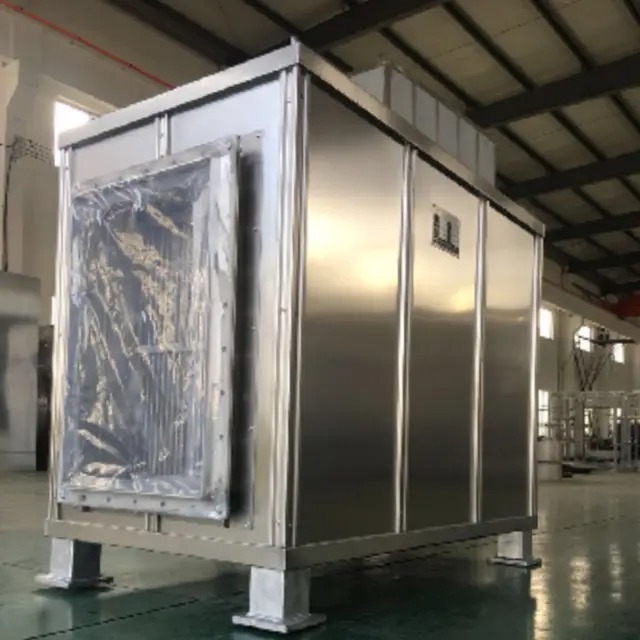
A Gas-to-Gas Plate Heat Exchanger (GGHE) is a type of heat exchanger where heat is transferred between two gas streams without mixing the gases. It consists of multiple thin, corrugated metal plates stacked together, creating parallel channels for the gas to flow through. The industrial gas passes through these channels in close proximity, facilitating efficient thermal exchange.
Unlike other heat exchanger types, such as shell-and-tube or air-cooled heat exchangers, a plate heat exchanger offers several advantages, especially in terms of heat transfer efficiency and space-saving design. The unique plate construction allows for a larger surface area in a more compact structure, maximizing the heat exchange process.
The Main Advantage of a Gas-to-Gas Plate Heat Exchanger
The primary benefit of a Gas-to-Gas Plate Heat Exchanger is its ability to provide highly efficient heat transfer between gases while maintaining a compact and space-efficient design. This translates into significant energy savings, reduced operational costs, and improved process efficiency. The high-efficiency design ensures minimal heat loss, which is critical in industries where energy consumption is a major concern.
Moreover, the use of plates in this heat exchanger allows for better control over temperature distribution and flow rates, leading to more consistent performance. Whether used in chemical plants, power generation, or HVAC systems, these exchangers contribute directly to enhancing the overall efficiency of the systems they are integrated with.
Energy Efficiency: Key Benefits of Gas-to-Gas Plate Heat Exchangers
One of the most prominent features of the Gas-to-Gas Plate Heat Exchanger is its energy efficiency. By facilitating the transfer of heat between two gases at differing temperatures, the system minimizes the need for additional heating or cooling. This process significantly reduces energy consumption compared to traditional heat exchangers that rely on larger, more power-hungry systems.
The high-efficiency design of the plate exchanger ensures that heat recovery is maximized, even in situations where there is a significant temperature difference between the gases. This makes it an ideal choice for industries where energy costs represent a large portion of operational expenses.
| Feature | Gas-to-Gas Plate Heat Exchanger | Traditional Heat Exchangers |
| Heat Transfer Efficiency | High Efficiency | Moderate |
| Energy Consumption | Low Energy Usage | Higher Energy Usage |
| Space Requirement | Compact Design | Bulky, requires more space |
| Maintenance Costs | Low Maintenance | Higher Maintenance |
By improving heat recovery and reducing the need for external energy sources, these exchangers can drastically lower the operating costs of any facility.
Compact Design: A Game Changer for Industrial Applications
In many industries, space is a critical resource. A Gas-to-Gas Plate Heat Exchanger offers a compact solution that minimizes the space required for heat transfer processes. Traditional heat exchangers, such as shell-and-tube models, can be bulky and take up valuable floor space. On the other hand, the plate design allows for a highly efficient heat transfer process while occupying less space, making it ideal for installations where space constraints are an issue.
Additionally, the modular nature of plate heat exchangers allows for easy scaling. More plates can be added to increase heat exchange capacity without significantly increasing the system’s footprint. This flexibility is particularly advantageous for industries that need to expand their operations without needing to redesign their heat transfer systems.
Durability and Maintenance in Gas-to-Gas Plate Heat Exchangers
Another key advantage of the Gas-to-Gas Plate Heat Exchanger is its durability and relatively low maintenance requirements. The plates are typically made from high-strength materials such as stainless steel or titanium, ensuring they can withstand harsh industrial conditions. They are resistant to corrosion, fouling, and scaling, which are common issues in traditional heat exchangers.
Moreover, because the plates are easily accessible, routine maintenance and cleaning can be done quickly, minimizing downtime and reducing overall maintenance costs. The simple yet robust design reduces the need for costly repairs or replacements, making it a highly durable choice for long-term industrial use.
Cost Savings and Return on Investment with Gas-to-Gas Heat Exchangers
The Gas-to-Gas Plate Heat Exchanger provides significant cost-saving opportunities in the long term. Although the initial investment may be higher than traditional systems, the energy efficiency, reduced maintenance costs, and longer lifespan ensure that the return on investment (ROI) is substantial.
By reducing energy consumption and improving operational efficiency, businesses can expect lower utility bills and faster payback periods. Furthermore, the low-maintenance nature of the system means that companies will spend less on repairs, increasing overall profitability.
Industrial Applications and Efficiency of Gas-to-Gas Plate Heat Exchangers
The Gas-to-Gas Plate Heat Exchanger is widely used across various industries, from chemical and petrochemical processing to HVAC systems and power plants. In chemical processing, for example, the exchanger can help recover heat from exhaust gases, reducing the need for external energy sources. This not only improves energy efficiency but also helps industries comply with stringent environmental regulations.
In power plants, the exchanger’s high-efficiency design allows for better heat recovery, improving the overall performance of the plant and lowering operational costs. The system’s compact nature is also a significant advantage in these types of applications, where space and efficiency are both critical.
Conclusion
The Gas-to-Gas Plate Heat Exchanger stands out as a highly efficient, cost-effective, and durable solution for various industrial heat exchange applications. Its ability to provide superior heat transfer in a compact design makes it an ideal choice for industries looking to reduce energy consumption and operational costs. The technology’s energy-saving potential, low maintenance, and flexibility in industrial applications make it a wise investment for businesses aiming for long-term sustainability and profitability.
As industries continue to prioritize energy efficiency, the adoption of Gas-to-Gas Plate Heat Exchangers will likely increase, offering significant benefits across multiple sectors.
FAQ
Q1: What makes a Gas-to-Gas Plate Heat Exchanger more efficient than traditional heat exchangers?
A1: The main advantage of a Gas-to-Gas Plate Heat Exchanger lies in its ability to maximize heat transfer with a compact and high-efficiency design. The plate arrangement allows for a large surface area in a smaller footprint, improving the heat exchange process and reducing energy loss compared to traditional systems.
Q2: How does the compact design of a Gas-to-Gas Plate Heat Exchanger benefit industrial applications?
A2: The compact design of a Gas-to-Gas Plate Heat Exchanger saves valuable space in industrial environments. Its modular design allows for scalability, meaning it can be expanded without occupying much more physical space, making it ideal for facilities with limited space.
Q3: Are Gas-to-Gas Plate Heat Exchangers easy to maintain?
A3: Yes, Gas-to-Gas Plate Heat Exchangers are relatively easy to maintain due to their durable plate design, which resists corrosion and fouling. The plates are accessible for cleaning and maintenance, reducing downtime and costs associated with repairs.
Q4: Can a Gas-to-Gas Plate Heat Exchanger be used in all industries?
A4: Gas-to-Gas Plate Heat Exchangers are versatile and can be used in a variety of industries, including chemical processing, HVAC systems, and power generation. They are particularly useful in applications where energy efficiency and compactness are crucial.


