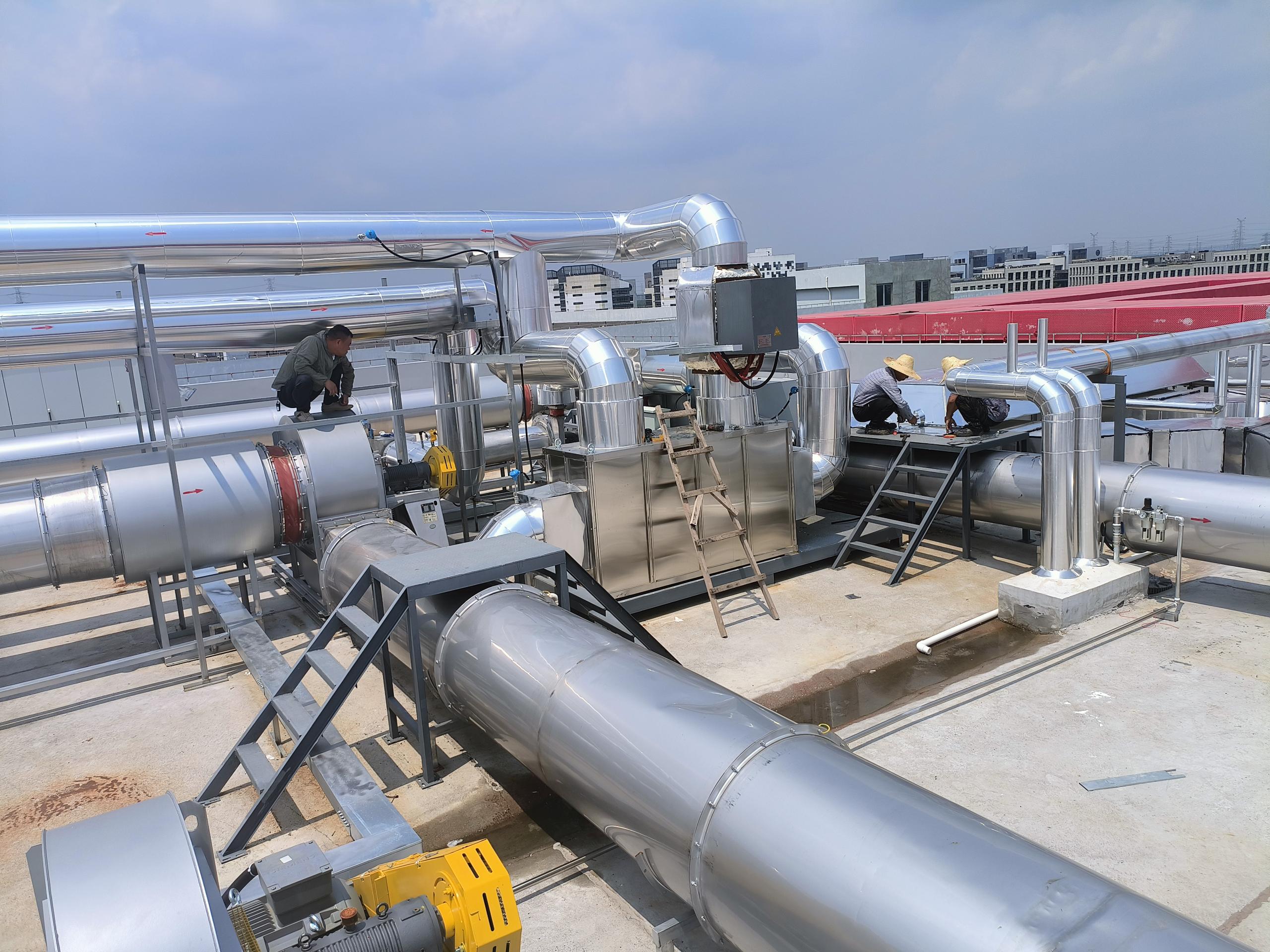
Designing high‑performance Heat Transfer Systems is a critical task for engineers across industries — from chemical processing, power generation, HVAC, to automotive and environmental systems. Central to these systems is the Heat Exchanger, the device that enables efficient heat exchange between fluid streams. A well‑designed heat exchanger can dramatically improve energy efficiency, reduce operational costs, and ensure stable temperature control. In this article, we dive deep into the design principles, engineering trade‑offs, and modern optimization techniques to help you build or select Heat Transfer Systems that deliver top thermal performance.
We will cover: fundamental design considerations, configuration and flow choices, surface enhancements, material and fluid selection, and advanced computational optimization techniques. Along the way, we include tables and comparisons to clarify trade‑offs and guide design decisions.
Fundamentals of Heat Exchanger Design: Heat Transfer Mechanisms & Design Variables
At the core of any Heat Transfer System is the Heat Exchanger — it relies on the basic physics of heat transfer to move energy between two fluids without mixing them.
Three Modes of Heat Transfer
Effective design begins with understanding the three fundamental modes of heat transfer:
Conduction — heat flows through solid walls/plates/tubes separating fluids.
Convection — heat carried by fluid motion; often this is the dominant mode inside heat exchangers.
Radiation — typically negligible in industrial heat exchangers compared to conduction and convection; design focus remains on conduction + convection.
A good design optimizes conduction path (thin walls with high thermal conductivity), and maximizes convective heat transfer through flow design and surface geometry.
Key Design Variables
When designing a Heat Exchanger within a broader Heat Transfer System, engineers must carefully choose:
Fluid properties: specific heat capacity, density, viscosity, thermal conductivity. These affect heat transfer rate and pressure drop.
Flow configuration & geometry: tube diameter, pitch, length; plate or fin geometry; shell/baffle layout.
Material selection: high thermal conductivity, corrosion resistance, mechanical strength to endure operating conditions.
Surface area: larger interface area leads to more heat transfer — achieved via fins, plates, corrugations, or extended surfaces.
Flow regime: laminar vs turbulent — turbulence enhances convection but increases pressure drop; must balance efficiency and pumping cost.
Maintenance accessibility: ease of cleaning, inspection, repair to prolong system life and maintain performance.
By carefully balancing these variables, a Heat Transfer System can achieve optimal thermal performance under real operational constraints.
Choosing the Right Heat Exchanger Type for Your Heat Transfer System
Not all heat exchangers are equal — different designs suit different applications. Selecting the appropriate type is among the most impactful decisions in system design. Here’s a summary of common types and their trade‑offs:
| Heat Exchanger Type | Strengths | Limitations / Considerations |
| Shell-and-Tube | Flexible for liquids/gases, robust for high pressure/temperature, modular for maintenance | Larger volume, potential for fouling in tubes, needs careful fluid distribution and baffle design |
| Plate-Fin / Plate | High surface area to volume ratio, very compact, efficient for gases or multi-stream heat transfer | Small channels — prone to fouling; cleaning difficult; sensitive to fluid cleanliness. |
| Double-Pipe / Hairpin | Simple design, easy maintenance, suitable for small-scale or low-flow applications | Limited capacity; less efficient surface-area-to-volume ratio. |
| Finned / Extended-Surface | Enhanced surface area, improved heat transfer per unit volume; good for compact systems | Added complexity; fins/channels can foul; requires design trade-offs between turbulence, pressure drop, and manufacturability. |
| Dynamic / Scraped-Surface | For viscous or fouling fluids — self-cleaning to maintain heat transfer efficiency | Mechanically more complex; higher manufacturing and maintenance cost; suited for specialized fluids (e.g. food, slurries). |
Key takeaway: Choose the exchanger type based on fluid properties, flow rates, operating conditions (temperature, pressure), space constraints, maintenance requirements, and fouling propensity.
Design Strategies for Maximizing Thermal Performance in Heat Transfer Systems
Once the exchanger type is selected, applying smart design strategies can substantially elevate system performance.
Maximize Heat Transfer Surface and Minimize Thermal Resistance
Use extended surfaces (fins, plates, corrugations) when space is constrained or when fluid flow is limited. This increases the contact area without necessarily increasing volume.
Choose materials with high thermal conductivity (e.g., copper, aluminum, stainless steel) to reduce conduction resistance.
Design wall or plate thickness to balance structural integrity and thermal resistance.
Optimize Flow Regime — Leverage Turbulent Flow Where Appropriate
Turbulent flow enhances mixing and convective heat transfer, significantly raising the convective heat transfer coefficient compared to laminar flow.
Introduce flow obstructions: baffles, turbulators, fins, corrugations, or geometry changes to trigger turbulence without excessive pressure drop.
Maintain an optimal balance: too much turbulence or too tight channels increases pressure drop and pumping energy — so design must consider both heat transfer and hydraulic performance.
Utilize Advanced Design & Optimization Methods
Recent research and engineering trends leverage computational methods to push heat exchanger performance beyond traditional designs:
Shape and topology optimization: Modern computational tools can reshape plate or shell-and-tube designs to maximize heat transfer rate while controlling pressure drop.
3D topology-optimized designs for two-fluid systems: For example, the framework in the recent paper DualMS: Implicit Dual-Channel Minimal Surface Optimization for Heat Exchanger Design demonstrates novel minimal-surface geometries that deliver high heat exchange rates with lower pressure drop — a promising direction for next-gen Heat Transfer Systems.
Simulation-driven validation (CFD, fluid–solid conjugate modeling): Before fabrication, designers can simulate fluid flow and heat transfer to predict performance, pressure drop, and fouling behavior — reducing trial-and-error and improving reliability.
These advanced techniques allow engineers to push the efficiency envelope — enabling smaller, more compact, more efficient heat exchangers for demanding applications.
Ensure Maintenance and Operational Feasibility
Designing for thermal performance is only part of the job. A practical Heat Transfer System must be maintainable, durable, and operable. Some key considerations:
Provide access for cleaning and inspection, especially in fouling-prone systems. Extended‑surface or plate‑fin exchangers may offer high performance — but if cleaning is impossible or costly, long-term performance will suffer.
Consider fluid selection and filtration: fluids should have appropriate chemical/physical characteristics to avoid fouling and corrosion, fluid treatment may be needed.
Ensure design accommodates pressure and temperature ranges: high-pressure or high-temperature applications demand robust materials and safety margins.
Plan for scalability and modularity — in industrial settings with evolving process demands, modular exchanger bundles allow easier upgrades, cleaning, or replacement.
Comparative Data — Example Design Scenarios & Expected Performance
To illustrate how different design choices affect performance and trade‑offs, here are hypothetical scenarios for two Heat Transfer Systems designed for the same thermal duty, but with different strategies:
| Scenario | Exchanger Type & Design | Key Features | Expected Benefits | Trade-Off / Notes |
| A — Compact industrial system, limited space | Plate‑fin heat exchanger | Corrugated fins, compact geometry, counter-flow arrangement | High surface area, compact footprint, efficient heat transfer | Susceptible to fouling; cleaning is difficult; fluid must be clean and filtered |
| B — High-capacity chemical processing, robust fluid | Shell‑and‑tube exchanger with extended surface and baffles | Optimized tube layout, turbulators, stainless steel tubes | Reliable, maintenance-friendly, high durability, good thermal performance | Larger size; moderate surface-area-to-volume ratio; requires more floor space |
| C — Advanced design optimized via computation | Topology-optimized heat exchanger (e.g., minimal surface channels) | CFD-optimized geometry, low-pressure-drop flow paths, customized channel topology | Max heat transfer rate for given pressure drop; high thermal efficiency; compact design | Requires advanced design & manufacturing methods; may increase fabrication cost |
| D — Fouling-prone fluid (viscous or high particulate) | Dynamic scraped-surface heat exchanger | Internal scraping mechanism to remove deposits continuously | Maintains high heat transfer, mitigates fouling, stable temperature control | Mechanically complex; higher maintenance cost; higher upfront cost |
This comparison shows how different design strategies align with application requirements — space constraints, fluid characteristics, maintenance capacity, thermal duty, and cost.
Integrating Heat Exchanger Design into Complete Heat Transfer Systems
Designing a single heat exchanger is important — but in real-world applications, exchangers operate as part of a broader Heat Transfer System that includes pumps, piping, controls, fluid treatment, sensors, and sometimes waste-heat recovery. It’s vital to consider the system-level context.
System-Level Considerations
Fluid loop design: Proper piping layout, minimal pressure losses outside exchanger, effective flow balancing among parallel exchanger units.
Pumps and flow control: Ensure pump capacity matches designed flow rates; avoid excessive pressure drop which can degrade performance.
Temperature control and sensors: Install sensors for inlet/outlet temperatures, flow meters, pressure gauges — enabling monitoring, control, and feedback for stable system operation and performance tracking.
Maintenance scheduling and accessibility: Design for easy access, assembly/disassembly, cleaning — especially important if fluids are corrosive, scaling, or viscous.
Integration with waste-heat recovery or multi-stage systems: For processes requiring multiple heat transfer steps, designers must consider temperature cascades, heat recovery loops, and overall energy efficiency — exchanger design affects the system’s overall thermal economy.
By treating the heat exchanger as one component in a holistic Heat Transfer System, designers can achieve optimized performance, reliability, and maintainability.
Emerging Trends & Future Directions in Heat Exchanger & Heat Transfer System Design
Looking ahead, several trends are shaping next‑generation Heat Transfer Systems and exchanger design — enabling higher efficiency, adaptability, and smarter maintenance.
Computational Optimization & Topology-Based Designs
Research such as the Sparse Narrow-Band Topology Optimization for Large-Scale Thermal-Fluid Applications presents methods to optimize geometry at large scale — producing exotic channel shapes that maximize heat transfer while minimizing pressure drop.
Similarly, Dual‑channel minimal surface designs (e.g., DualMS) push performance further — offering flexible, freeform exchanger geometries that traditional tube/plate layouts cannot match.
These developments signal a shift from standard exchangers to highly optimized, bespoke Heat Transfer Systems — especially valuable in space‑constrained or high‑performance contexts.
Simulation & Digital Twin / Virtual Commissioning
With advances in computational fluid dynamics (CFD) and thermal modeling, engineers can simulate entire Heat Transfer Systems before building — analyzing flow, pressure drop, heat transfer, fouling propensity, and structural stress under operating conditions.
Digital‑twin approaches make it possible to monitor system performance in real-time and schedule maintenance proactively — improving operational reliability and optimizing energy efficiency.
Enhanced Surface & Material Innovations
Enhanced surfaces — fins, corrugations, turbulators — remain important, but material science is also advancing. New alloys, composite materials, and coatings increase thermal conductivity, corrosion resistance, fouling resistance, and structural strength — extending exchanger life and reducing maintenance needs.
As environmental regulation and sustainability concerns grow, efficient Heat Transfer Systems with minimal energy loss, maximal heat recovery, and long service life will become increasingly valuable.
Recommendations — Best Practices for Engineers Designing Heat Transfer Systems
Based on the discussion, here are recommended best practices for designing modern, high‑performance Heat Transfer Systems:
Start from system requirements: Clearly define thermal duty, fluid properties, flow rates, pressure/temperature conditions, maintenance intervals, space constraints, and lifecycle costs.
Select exchanger type according to application context: Choose shell-and-tube, plate-fin, dynamic, or optimized topology-based exchangers depending on fluid properties, fouling risk, space, and performance requirements.
Leverage advanced design tools: Use CFD simulation, topology optimization, and shape optimization techniques to explore geometry variants and maximize heat transfer vs pressure drop efficiency.
Design for maintenance and durability: Ensure accessible surfaces, design for cleaning or self-cleaning (if needed), use appropriate materials resistant to corrosion or fouling.
Optimize flow regimes: Promote turbulence/mixing through clever geometry or inserts — but balance with pumping energy and pressure drop considerations.
Incorporate monitoring and control: Add sensors for flow, temperature, pressure; consider digital-twin or real-time monitoring solutions for predictive maintenance.
Plan for scalability and modularity: Modular exchanger bundles or adaptable designs help accommodate future changes in process requirements or capacity expansion.
Document and test thoroughly: Validate designs with simulation and test data (LMTD, NTU, pressure drop), and maintain rigorous quality & safety standards in manufacturing and operation.
Summary & Key Takeaways
The Heat Exchanger is central to any efficient Heat Transfer System — but its performance depends heavily on design choices: configuration, geometry, materials, flow regime, and maintenance accessibility.
Maximizing heat transfer surface area, promoting turbulent flow, and optimizing material and fluid selection are foundational to high thermal performance.
Modern techniques — topology optimization, computational simulation, and digital‑twin monitoring — offer powerful tools to push performance beyond traditional designs, achieving higher heat exchange rates with compact footprint and lower pressure loss.
Practical design must balance performance with maintainability, durability, and lifecycle costs — especially in industrial applications.
For future‑ready Heat Transfer Systems, integrate smart monitoring, modular design, and maintenance‑friendly structures from the outset.
By applying these principles and strategies, engineers and system designers can build Heat Transfer Systems that deliver high efficiency, strong temperature control, reduced energy consumption, and long-term reliability.
FAQs
Q1: What is the difference between optimizing a heat exchanger’s geometry and simply increasing its size for better heat transfer?
Geometry optimization (via fins, corrugations, topology‑optimized channels) increases effective surface area and enhances convective mixing, improving heat transfer per unit volume — unlike simply increasing size, which may improve heat transfer but at the cost of space, material, and often diminished returns due to increased pressure drop or inefficient flow.
Q2: Should I always aim for turbulent flow when designing a Heat Transfer System?
Not always. While turbulent flow boosts convective heat transfer, it also increases pressure drop and pumping energy. The optimal design balances improved heat transfer with acceptable hydraulic losses, considering fluid properties, pumping capacity, and energy cost.
Q3: Why are advanced computational optimization methods becoming more important for heat exchanger design?
They allow exploration of complex geometries — minimal-surface channels, customized flow paths, non‑traditional shapes — that maximize heat transfer rate while controlling pressure drop and material cost. This leads to compact, high‑efficiency exchangers often superior to standard designs.
Q4: In what cases are dynamic or scraped-surface heat exchangers preferred?
They are ideal for fluids prone to fouling, high viscosity, or containing particulates — where conventional exchangers would quickly lose efficiency. The scraping mechanism removes deposits and maintains heat transfer efficiency, ensuring stable performance.
Q5: How important is maintenance and fluid cleanliness when designing Heat Transfer Systems?
Very important. Even the most efficient design can underperform or fail if fouling, corrosion, or bypass occur. Designing for maintenance access, using clean/treated fluids, and planning cleaning cycles are essential parts of a robust Heat Transfer System design.


