Contents
Introduction
Understanding Gas-to-Gas Plate Heat Exchangers
Key Components of a Gas-to-Gas Plate Heat Exchanger
How a Gas-to-Gas Plate Heat Exchanger Works
Applications of Gas-to-Gas Plate Heat Exchangers
Advantages of Gas-to-Gas Plate Heat Exchangers
Design Considerations for Optimal Performance
Maintenance and Longevity of Gas-to-Gas Plate Heat Exchangers
Conclusion
FAQs
Introduction
A Gas-to-Gas Plate Heat Exchanger (GGHE) is an advanced thermal management solution designed to transfer heat between two gas streams. These devices are particularly crucial in industrial applications where precise control over temperature is essential. By utilizing an innovative design that maximizes heat transfer efficiency, Gas-to-Gas Plate Heat Exchangers offer a cost-effective and energy-efficient alternative to traditional heat exchangers.
In this article, we will explore how these heat exchangers work, their components, their benefits, and their diverse applications. Additionally, we will delve into the critical design elements and maintenance practices that ensure the longevity and efficiency of High-Efficiency Gas-to-Gas Plate Heat Exchangers.
Understanding Gas-to-Gas Plate Heat Exchangers
A Gas-to-Gas Plate Heat Exchanger is designed specifically for the thermal exchange between two gaseous fluids. Unlike liquid-based heat exchangers, GGHEs are engineered to handle gases at various temperatures, pressures, and flow rates. The key to their efficiency lies in the ability to achieve maximum heat transfer with minimal energy input.
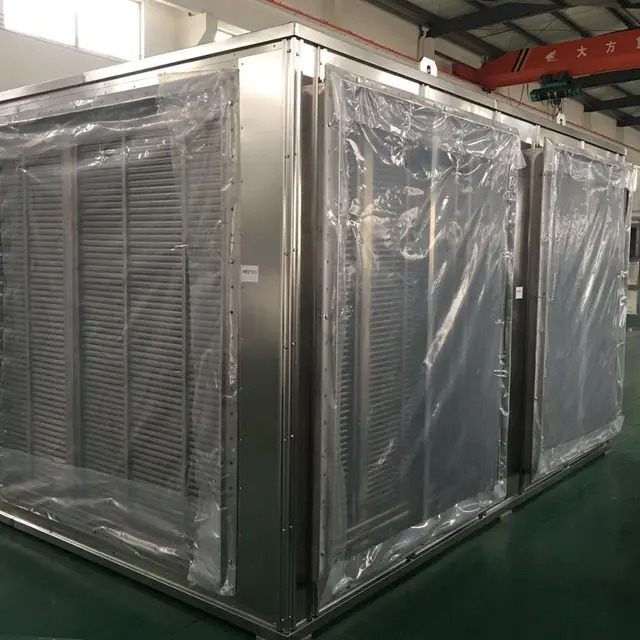
These exchangers typically consist of multiple thin plates stacked together, creating channels through which gases flow. The plates are usually made of durable materials like stainless steel, which offer resistance to corrosion and wear, making them suitable for high-performance, Industrial Gas-to-Gas Plate Heat Exchangers.
Key Components of a Gas-to-Gas Plate Heat Exchanger
The primary components that make up a Gas-to-Gas Plate Heat Exchanger include:
Heat Transfer Plates: These plates are the main medium for heat transfer. They are often corrugated to increase the surface area and enhance heat exchange efficiency.
Gasket or Seals: These ensure that the gases remain separated, preventing any cross-contamination while maintaining the integrity of the heat transfer.
Headers: Located at the inlet and outlet of the exchanger, headers direct the flow of gases into and out of the unit.
Frame: The frame holds all the plates together, providing structural support and ensuring that the system can withstand the pressures and forces at play.
Each of these components is critical to the durable and high-efficiency operation of a Gas-to-Gas Plate Heat Exchanger, ensuring that heat transfer is maximized and energy loss is minimized.
How a Gas-to-Gas Plate Heat Exchanger Works
Heat Transfer Process
In a Gas-to-Gas Plate Heat Exchanger, the heat transfer process is facilitated by the flow of two different gas streams through separate channels formed by the plates. As one gas stream flows over the plates, its thermal energy is transferred to the plate material. The other gas stream, flowing on the opposite side of the plate, absorbs this heat.
The efficiency of heat transfer is determined by several factors, including the temperature differential between the two gases, the flow rate, and the surface area of the plates. High-efficiency Gas-to-Gas Plate Heat Exchangers optimize these variables to ensure maximum heat recovery with minimal energy consumption.
Gas Flow Paths
The design of a Gas-to-Gas Plate Heat Exchanger is such that the two gases flow in counter-current or sometimes in cross-flow configurations. In counter-current flow, the two gases flow in opposite directions, which ensures that the temperature gradient is maintained along the entire length of the heat exchanger. This configuration leads to higher heat transfer efficiency compared to parallel flow or cross-flow designs.
Thermal Efficiency
The overall thermal efficiency of a Gas-to-Gas Plate Heat Exchanger is influenced by its design, material, and the specific flow arrangement used. Compact and energy-saving designs often use multi-pass configurations to enhance the heat exchange rate, allowing for better energy utilization and reducing operating costs.
Applications of Gas-to-Gas Plate Heat Exchangers
Gas-to-Gas Plate Heat Exchangers are used in a wide range of applications, particularly in industries that require precise control over gas temperature and efficient heat recovery. Some notable applications include:
Power Generation: In power plants, where heat recovery is crucial to improving efficiency and reducing emissions.
Chemical Processing: For maintaining optimal temperatures in reaction chambers and distillation columns.
HVAC Systems: In buildings, to regulate air temperature and improve energy efficiency.
Industrial Furnace Systems: For recovering heat from exhaust gases and reusing it in the heating process.
Oil and Gas: To manage the heat exchange between natural gas and other fluids in refining and processing operations.
These exchangers are particularly valued in industrial settings where high-efficiency, durable, and compact solutions are essential.
Advantages of Gas-to-Gas Plate Heat Exchangers
High Thermal Efficiency: The compact design and optimized heat transfer surface area of Gas-to-Gas Plate Heat Exchangers ensure maximum thermal efficiency.
Energy Saving: By recovering heat from exhaust gases, these exchangers contribute significantly to energy conservation, making them an environmentally friendly choice for industrial applications.
Compact Design: Their plate-based structure allows for a high level of heat exchange in a relatively small space, making them ideal for locations with space constraints.
Durability: The materials used in these heat exchangers are resistant to corrosion and wear, offering long service life even in harsh environments.
Easy Maintenance: With modular components, maintenance is relatively straightforward. Plates can be cleaned, replaced, or upgraded to improve performance without the need for extensive system overhauls.
Design Considerations for Optimal Performance
When designing a Gas-to-Gas Plate Heat Exchanger, several key factors need to be considered to optimize its performance:
Material Selection: The choice of material is crucial, particularly for industrial applications. Stainless steel and other corrosion-resistant alloys are commonly used to withstand high temperatures and aggressive gases.
Plate Design: The design of the plates, including their corrugation patterns and thickness, affects both heat transfer efficiency and the ability to handle high-pressure conditions.
Flow Arrangement: Counter-current flow generally provides the best heat transfer efficiency, but other arrangements may be chosen based on the specific requirements of the system.
Pressure and Temperature Conditions: The exchanger must be designed to handle the expected pressure and temperature variations of the gases it will process.
Cleaning and Maintenance Access: To maintain high efficiency, regular cleaning is necessary to prevent fouling. The design should allow for easy access to plates for maintenance.
Maintenance and Longevity of Gas-to-Gas Plate Heat Exchangers
To ensure the durability and long-lasting performance of a Gas-to-Gas Plate Heat Exchanger, it is essential to implement regular maintenance practices. These include:
Periodic Inspection: Regularly checking for signs of wear, corrosion, or fouling is essential to identify potential issues before they lead to system failure.
Cleaning: Fouling can reduce the heat transfer efficiency of the exchanger. Cleaning the plates at scheduled intervals helps to maintain optimal performance.
Gasket Replacement: Over time, gaskets can degrade and cause leaks. Regular replacement ensures that the unit remains sealed and operates efficiently.
Monitoring Performance: Using sensors to monitor the performance of the heat exchanger, including temperature and pressure, can help identify when maintenance or adjustments are needed.
Conclusion
A Gas-to-Gas Plate Heat Exchanger is an advanced and highly efficient solution for transferring heat between two gas streams. With its compact, energy-saving, and durable design, it plays a crucial role in various industrial applications, offering significant benefits in terms of energy conservation and process optimization.
To maximize the effectiveness of a Gas-to-Gas Plate Heat Exchanger, it is essential to focus on key design factors such as material selection, plate configuration, and regular maintenance. When properly designed and maintained, these heat exchangers provide long-term, high-efficiency performance, making them indispensable in modern industrial operations.
FAQs
Q1: What makes a Gas-to-Gas Plate Heat Exchanger more efficient than other heat exchangers?
A1: The key to its efficiency lies in the compact design and high surface area of the plates, which maximize heat transfer while minimizing energy loss. Additionally, counter-current flow increases the temperature gradient, enhancing heat recovery.
Q2: Can a Gas-to-Gas Plate Heat Exchanger handle high temperatures?
A2: Yes, these heat exchangers are designed to handle a wide range of temperatures, with the materials selected for durability and heat resistance. They are ideal for high-temperature gas streams found in power plants and industrial processes.
Q3: How often does a Gas-to-Gas Plate Heat Exchanger need maintenance?
A3: Maintenance frequency depends on the operating conditions. However, it is generally recommended to inspect the system regularly for signs of wear, corrosion, and fouling. Cleaning and gasket replacement should be performed based on operational needs.
Q4: Are Gas-to-Gas Plate Heat Exchangers suitable for small-scale operations?
A4: Yes, the compact design of these heat exchangers makes them suitable for both large and small-scale operations. They can be customized for different flow rates and temperature ranges, making them versatile for various applications.


