Contents
Introduction
What is a Gas-to-Gas Plate Heat Exchanger?
Key Features of a Gas-to-Gas Plate Heat Exchanger
Why Gas-to-Gas Plate Heat Exchangers Are More Efficient
Comparison with Other Types of Heat Exchangers
Applications of Gas-to-Gas Plate Heat Exchangers
How Gas-to-Gas Plate Heat Exchangers Contribute to Sustainability
Conclusion
FAQ
Introduction
In the world of industrial heating and cooling, Gas-to-Gas Plate Heat Exchangers have emerged as one of the most efficient and compact solutions for thermal management. These devices are particularly effective in processes where gases need to be cooled or heated without mixing or contaminating each other. By using a series of thin plates stacked together, gas-to-gas plate heat exchangers allow for maximum heat transfer efficiency while maintaining a compact design. In this article, we explore the reasons why gas-to-gas plate heat exchangers are more efficient than other heat exchangers, examining their design, advantages, and their role in energy saving.
What is a Gas-to-Gas Plate Heat Exchanger?
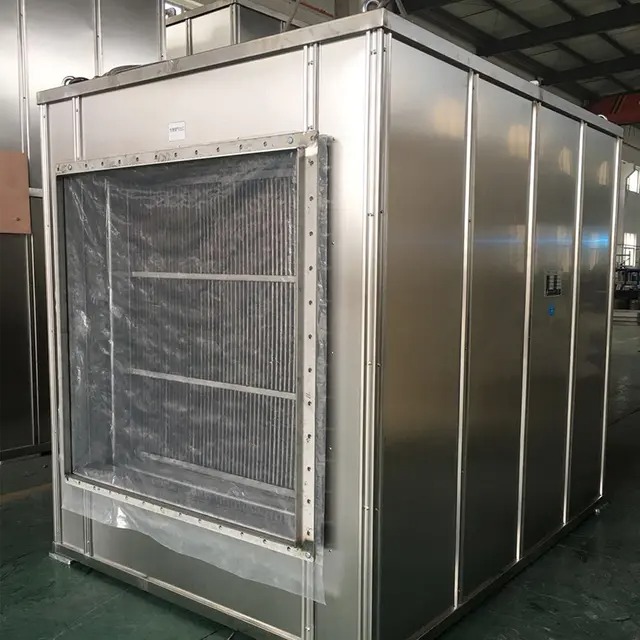
A Gas-to-Gas Plate Heat Exchanger (G2G heat exchanger) is a type of heat exchanger that transfers heat between two gas streams. These systems are typically designed with a series of corrugated plates stacked together, with one gas passing through each side of the plate. The thin plates enhance the heat transfer surface area, while the corrugations create turbulence, increasing the efficiency of heat exchange. This design makes gas-to-gas plate heat exchangers particularly suitable for industries where space is limited and energy efficiency is a top priority.
The compact nature of these heat exchangers makes them ideal for use in industries such as power generation, petrochemical, HVAC, and waste heat recovery systems. Their ability to handle high-temperature gases and operate efficiently even in harsh environments further contributes to their widespread use.
Key Features of a Gas-to-Gas Plate Heat Exchanger
Compact Design
One of the defining characteristics of a Gas-to-Gas Plate Heat Exchanger is its compact design. Unlike traditional heat exchangers, such as shell and tube exchangers, which can be bulky and space-consuming, plate heat exchangers are highly efficient in utilizing available space. The plates are stacked in a modular design, allowing for easy expansion or modification of the system. This is a significant advantage in industrial applications where floor space and weight constraints are critical factors.
The small size of gas-to-gas plate heat exchangers does not compromise their performance. In fact, the increased surface area provided by the thin, corrugated plates allows for a much higher heat transfer rate compared to traditional designs.
High Efficiency
Another prominent feature of Gas-to-Gas Plate Heat Exchangers is their high efficiency. The professional design of these heat exchangers allows them to achieve superior thermal performance. By increasing the turbulence of the fluid flow through the plates, the system ensures that the heat transfer rate is maximized. This is particularly important when dealing with gases, as their thermal conductivity is generally lower than that of liquids.
Moreover, the close spacing of the plates reduces the heat loss and improves the heat exchange between the two gas streams. This results in significant energy savings over time, making gas-to-gas plate heat exchangers ideal for industries that prioritize energy-saving solutions.
Why Gas-to-Gas Plate Heat Exchangers Are More Efficient
Improved Heat Transfer Efficiency
Heat transfer efficiency is the most critical factor that sets Gas-to-Gas Plate Heat Exchangers apart from other types of heat exchangers. The design of these heat exchangers ensures that the two gases are in close contact with each plate surface, which greatly enhances the heat transfer process. The corrugated plates further enhance the efficiency by creating turbulence in the gas flow, improving heat exchange between the gases.
In traditional heat exchangers, such as shell and tube exchangers, the flow is often more laminar, which reduces the rate of heat transfer. However, in gas-to-gas plate heat exchangers, the turbulence generated by the plate design disrupts the laminar flow, making the heat exchange process much more effective.
Energy Saving Capabilities
Gas-to-Gas Plate Heat Exchangers are engineered with energy efficiency in mind. Their compact design and superior heat transfer properties mean that they require less energy to achieve the same thermal effects compared to larger, less efficient systems. This is particularly important for industrial applications, where energy consumption can be a significant cost.
Additionally, energy-saving technologies like variable speed fans, integrated controls, and heat recovery systems can be incorporated into the heat exchanger design, further enhancing their overall energy-saving capabilities.
Comparison with Other Types of Heat Exchangers
Shell and Tube Heat Exchangers
When compared to shell and tube heat exchangers, Gas-to-Gas Plate Heat Exchangers offer several advantages. Shell and tube heat exchangers are typically bulkier, and their design may not provide the same level of heat transfer efficiency as plate-based systems. The large size of shell and tube heat exchangers often leads to higher energy consumption and maintenance costs.
Furthermore, gas-to-gas plate heat exchangers are more flexible in terms of scalability. With plate heat exchangers, it’s easy to add or remove plates, allowing for quick adjustments to accommodate changing heat transfer requirements. This is not as straightforward with shell and tube exchangers, which are generally fixed in size.
Air-to-Air Heat Exchangers
Another common heat exchanger type is the air-to-air heat exchanger, often used in ventilation systems. While air-to-air heat exchangers also allow for heat recovery, they typically operate at lower efficiency levels compared to gas-to-gas plate heat exchangers. The latter's compact design and ability to handle a wider range of temperatures make them more suitable for industrial environments.
Applications of Gas-to-Gas Plate Heat Exchangers
The versatility of gas-to-gas plate heat exchangers makes them suitable for a wide variety of applications. Some common uses include:
Waste Heat Recovery: Capturing waste heat from industrial processes to reuse in other operations, reducing energy consumption.
Power Generation: Maximizing heat recovery from gas turbines and other power generation equipment.
Petrochemical Processing: Efficient heat exchange in the processing of chemicals and fuels.
HVAC Systems: Providing energy-efficient heating and cooling solutions for large buildings or facilities.
How Gas-to-Gas Plate Heat Exchangers Contribute to Sustainability
In addition to their energy-saving capabilities, gas-to-gas plate heat exchangers contribute to sustainability by enabling the recovery and reuse of waste heat. By using these exchangers, industries can significantly reduce their carbon footprint and energy consumption. The more efficient the heat transfer process, the less energy is needed to maintain the required temperatures.
Furthermore, the compact nature of gas-to-gas plate heat exchangers allows for more efficient use of resources, reducing the need for large-scale infrastructure and minimizing environmental impact.
Conclusion
Gas-to-Gas Plate Heat Exchangers stand out as a highly efficient, compact, and energy-saving solution for industrial heat exchange needs. Their ability to provide superior heat transfer efficiency while using less energy makes them a top choice for companies looking to improve operational efficiency and reduce costs. As industries continue to focus on sustainability and energy-saving technologies, the role of gas-to-gas plate heat exchangers will only become more critical in shaping the future of thermal management.
FAQ
Q1: What industries can benefit from using a Gas-to-Gas Plate Heat Exchanger?
A1: Industries such as power generation, petrochemicals, HVAC, and waste heat recovery can greatly benefit from Gas-to-Gas Plate Heat Exchangers due to their high efficiency and compact design.
Q2: How does the design of a Gas-to-Gas Plate Heat Exchanger improve heat transfer efficiency?
A2: The design incorporates thin, corrugated plates that increase the surface area for heat transfer, while the turbulence created by the corrugations enhances heat exchange, improving overall efficiency.
Q3: Are Gas-to-Gas Plate Heat Exchangers more energy-efficient than traditional systems?
A3: Yes, gas-to-gas plate heat exchangers are more energy-efficient due to their compact design and the ability to achieve higher heat transfer rates with less energy consumption compared to traditional systems like shell and tube heat exchangers.
Q4: Can Gas-to-Gas Plate Heat Exchangers be used in high-temperature applications?
A4: Yes, gas-to-gas plate heat exchangers are capable of handling high-temperature gases, making them suitable for use in a wide range of industrial processes.


